


We'll test the water in your system, check how your radiators are heating and tell you plainly whether a clean, a magnetic filter or both would help. If your boiler is due its yearly check, a boiler service is a good time to ask about your filter too.
Blog
Is a magnetic filter worth fitting to my heating?
What a magnetic filter catches, what it can't fix, and when it's worth adding to your central heating.
8 November 2026
By Bog Standard Plumbing and Heating

Black water when you bleed a radiator, or radiators that stay cold at the bottom, usually mean sludge is moving round your heating. A magnetic filter is a small canister on the pipework near your boiler that catches that sludge before it reaches the boiler. For most homes with a gas boiler and steel radiators, it is worth fitting, and when a new boiler goes in, the guidance in England now expects one.
Below we explain where the sludge comes from, what a filter does and doesn't do, and when it's most worth having. There are a few things you can safely check yourself, but cleaning the filter means opening the heating system, so that part is a job for your engineer.
Where the sludge in your heating comes from
Most radiators, and many of the fittings in a heating system, are made of steel. Over the years the water inside slowly corrodes them from the inside. That corrosion makes magnetite, a black iron oxide that looks like fine black mud.
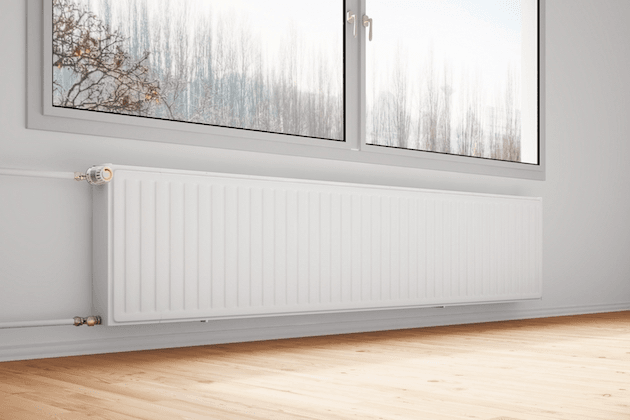
Some of it settles in the bottom of your radiators, which is why they go cold at the bottom while the top stays warm. The rest travels round the system. It can wear the pump, which pushes water round the pipes, and block the heat exchanger, the part of the boiler where the water picks up heat from the burner.
Inhibitor, a chemical added to the heating water to slow corrosion down, helps a great deal. But it weakens over time, and even a well-treated system makes a little sludge.
What a magnetic filter does
The filter is fitted on the return pipe, the pipe that carries cooled water back into the boiler. As the water passes through, a strong magnet inside the canister pulls the magnetite particles out and holds on to them.
Many filters also have a chamber that slows the water down, so heavier non-magnetic dirt drops to the bottom. Everything the filter catches stays there until an engineer cleans it out, instead of going round and round your system and through your boiler.
What a filter can't do
A filter is a good protector, but it isn't a cure. It's worth knowing its limits:
It won't shift sludge that has already settled in your radiators. It only catches what is moving.
It won't remove limescale already stuck to the inside of the boiler.
It doesn't replace inhibitor. The two work together.
It only works while it's cleaned. A full filter stops catching dirt and can slow the water down.
If your system is already badly sludged, it usually needs cleaning first, often with a powerflush. The filter then keeps it clean afterwards. Our post on the signs you need a powerflush explains how to tell.
When a filter is most worth having
When you have a new boiler fitted. Modern boilers have narrow waterways that sludge blocks easily. In England, building regulations guidance since June 2022 says the system should be cleaned, an in-line filter fitted and inhibitor added when a new boiler goes in. Some manufacturers also make a filter a condition of their longer guarantees, and repairs caused by sludge may not be covered at all, so check your guarantee paperwork.
After a powerflush. It protects the work you've just paid for.
On an older system with steel radiators, especially if you see black water when bleeding them or need to bleed them often.
After new radiators or pipework changes, which can stir up debris that has sat still for years.
Safe checks you can make at home
You can find out a fair amount without touching any part of the system:
Look at the pipework under your boiler. A filter is usually a round canister with a cap on top, often with a maker's name on the side.
Check the paperwork from your last service for a note that the filter was cleaned.
Next time you bleed a radiator, catch a little water on a cloth. Clear or slightly grey is normal. Black means magnetite is moving round your system. Check the pressure gauge on your boiler afterwards, as bleeding lets a little pressure out.
Once the heating has been on a while, feel each radiator. Warm at the top and cold at the bottom points to sludge.
Please don't open the filter yourself. It holds heating water under pressure, right next to your boiler. Opening it lets water out, the seals have to go back exactly right or it can leak, and the system may then need topping up with inhibitor and repressurising.
Cleaning the filter at your annual service
A filter should be cleaned at every annual boiler service. The engineer closes the valves either side of it, removes the magnet, washes off what it has caught, checks the seals and puts it back together.
What comes out tells the engineer a lot. A little grey dust is normal. A thick black coating, or a filter that fills up fast between services, suggests the system is corroding and the inhibitor may need checking. If you have a filter, ask for it to be cleaned as part of your boiler service.
What affects the cost of fitting one
Every home is different, so the price depends on a few things:
whether there is room on the return pipe near the boiler, and the size of that pipe
whether the system needs cleaning before the filter goes on
whether it is fitted alongside other work, such as a boiler replacement or a powerflush, so the system only has to be drained once
topping up the inhibitor afterwards
How we clean systems and fit filters
When we look at a sludged system, we start with a survey. We check the radiators, pipework and boiler, record radiator temperatures and test the water quality. If the system needs it, we flush it with manufacturer-approved chemicals until the water runs clean, then balance the radiators so each one heats evenly. We fit a magnetic filter where one is needed and give you a before-and-after report, so you can see the difference.
If you've seen black water when bleeding a radiator, or you're not sure whether your system has a filter at all, Bog Standard Plumbing and Heating can check it for you. Book a visit through our powerflushing and system cleaning service and we'll test the water, show you what we find and recommend whether a clean, a filter or both would help.
Other Articles
More From Our Blog