
If some rooms in your home feel like a sauna while others never quite warm up, it’s likely your radiators need balancing. Uneven heating wastes energy and can leave parts of your house uncomfortable. With a bit of patience and care, you can improve your home’s comfort and heating efficiency by adjusting the radiator valves, no need to change the boiler settings. Balancing your radiators helps ensure warm water flows evenly throughout your system, reducing boiler strain and lowering energy bills.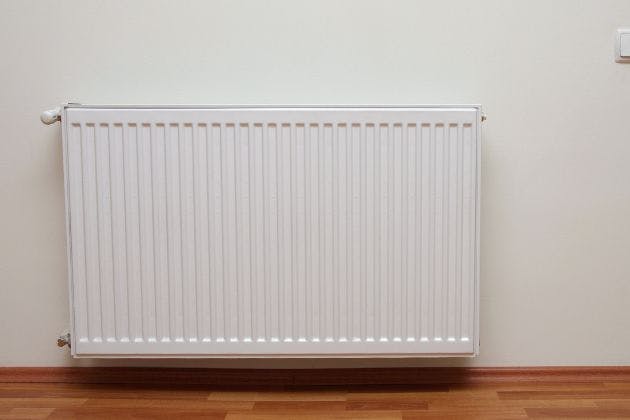
What radiator balancing actually does
Balancing is the process of adjusting how much hot water flows through each radiator so they all heat up at a similar rate. It does not change the overall boiler temperature, but it helps share the heat more fairly around the system.
In many homes, radiators closest to the boiler get too much flow and heat quickly, while those further away struggle. By slightly restricting flow to the hottest radiators, you encourage more heat to reach the colder ones.
Done properly, balancing helps with:
Comfort: Fewer hot and cold spots around the house
Efficiency: Boiler and pump do not have to work as hard
Reduced boiler cycling: Less constant turning on and off
Quieter operation: Fewer noisy pipes and rushing water
Key parts on your radiator
Before you start, it helps to know which valve does what. Most radiators will have two valves, one at each end of the bottom pipe connections.
On one side you will usually find a TRV (thermostatic radiator valve) or a simple on/off manual valve with numbers or a clear open/close marking. This is the one you use daily to control room temperature.
On the other side is the lockshield valve. It often has a plain plastic cap, sometimes without markings, and may need a small spanner or adjustable wrench to turn the spindle underneath. This is the valve used for balancing, and once adjusted it is normally left alone.
Safety checks before you start
Radiator pipes and valves can get very hot, so take precautions. If you are unsure at any point, stop and contact a qualified heating engineer.
Let children and other household members know what you are doing so nobody accidentally grabs a hot valve. Have a cloth or thin glove handy to test temperatures and protect your hands while working near hot metalwork.
Step-by-step radiator balancing guide
1. Prepare your heating system
Turn the heating on and set the room thermostat higher than normal so the boiler runs continuously for a while. This gives you a stable starting point to work from.
Open all TRVs or manual radiator valves fully on every radiator. If any radiators are off or partially closed, you will not get a true picture of the system balance.
2. Identify the order of your radiators
In most homes, the radiator closest to the boiler will heat up first. The one furthest away will often be the slowest or coolest. Walk around the house and note which radiators get hot fastest.
If you like, jot down a simple list from “nearest and hottest” to “furthest and coolest”. This gives you a clear order to work through as you balance.
3. Find and record lockshield positions
On each radiator, remove the lockshield cap and look for the small metal spindle. Before turning anything, note the current position. You can count how many full turns it takes to close from fully open, or mark the spindle and body with a felt tip.
Recording starting positions means you can always go back if needed. Skipping this step is a common mistake and makes it hard to recover if you over-adjust.
4. Start with the radiator nearest the boiler
Begin balancing on the radiator that heats up first, usually closest to the boiler or airing cupboard. This is typically the one that needs its lockshield closing the most.
With the heating running, very carefully feel the flow pipe into the radiator and the return pipe out. You are aiming for a gentle temperature drop from one side to the other, often around 10 to 20 °C on many systems, but consistency across radiators is more important than a perfect number.
5. Make small lockshield adjustments
Use a spanner or pliers to slightly close the lockshield on the hottest radiators. Work in small steps, about a quarter of a turn at a time, and wait a few minutes between adjustments for the temperature to settle.
If you have a clamp-on or infrared thermometer, measure the temperature of the flow and return pipes. If not, use touch as a guide: the return should feel a bit cooler than the flow, not stone cold, but not almost identical either.
6. Move gradually through the system
Once you have tamed the hottest radiator, move to the next one on your list. That radiator might only need a slight tweak, or none at all, depending on how it feels compared with the others.
Radiators further from the boiler may need their lockshields more open to get a decent flow. In some cases, the furthest one may already be fully open and still a bit cooler, which can be normal in very long or older systems.
7. Re-check and fine-tune
After you have adjusted every radiator, let the heating run for 20 to 30 minutes, then walk the house again. Check that all rooms are warming more evenly and that no radiator is now much hotter or cooler than the rest.
If one room is still struggling, open that radiator’s lockshield slightly and, if necessary, close the lockshield a touch more on one of the very warm radiators elsewhere. Take your time, and give the system a chance to react after each tweak.
Frequent mistakes to avoid
Balancing is fiddly rather than difficult, so it is easy to go wrong in small ways. Watching out for these issues can save you a lot of frustration:
Adjusting TRVs instead of lockshields: TRVs control room temperature, not system balance
Over-adjusting: Large half or full turns at once can swing temperatures wildly
Not noting starting positions: Makes it hard to undo changes if results get worse
Not allowing time: Radiators need several minutes to respond to each change
When balancing will not cure the problem
If you have followed the steps carefully and still have very poor heating in some rooms, there may be an underlying fault. Balancing can only work if hot water is able to circulate freely.
Common issues include sludge or rust build-up inside radiators and pipes, which restricts flow. If you suspect this, a professional powerflushing service may be needed to thoroughly clean the system.
A failing or undersized pump, or severe airlocks trapped in the pipework, can also cause uneven heating that balancing alone cannot fix. In these cases a boiler repair visit or pump assessment is often required.
In older systems with very mixed pipe sizes or badly altered layouts, you may benefit from a more modern, correctly designed central heating installation to achieve truly even and efficient heating.
When to call a professional for help
If you are not comfortable working on hot pipes, cannot identify the valves, or your heating remains unreliable after several careful attempts, it is time to get expert support. A qualified engineer can check balancing along with pump performance, boiler settings and general system health.
Bog Standard Plumbing and Heating can carry out a thorough heating system health check, including radiator balancing, flow testing and advice on any upgrades that would genuinely help. If your home never quite feels evenly warm, call Bog Standard Plumbing and Heating on 03301132248 to arrange a visit and get your central heating running smoothly again.