
If your boiler has started rumbling, banging, or making a noise like a kettle boiling on the hob, it can be quite alarming and disruptive. These kettling sounds usually mean there’s a build-up of limescale or sludge inside the system, causing water to overheat and create steam bubbles. The good news is that kettling is often fixable with the right attention, but it should never be ignored, as leaving it untreated can lead to more serious damage and costly repairs. Acting quickly can help keep your heating running smoothly and your home warm and safe.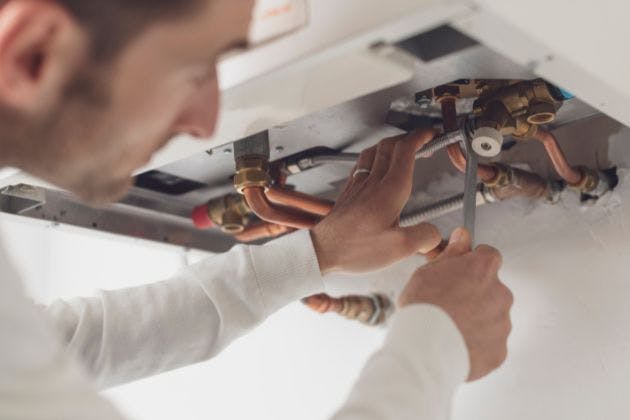
What kettling noise from a boiler usually means
"Kettling" is the term engineers use when a boiler makes a loud rumbling, bubbling or whooshing noise, often building up and then fading away. It is typically caused by overheating water and steam bubbles forming inside the boiler.
This most often happens when limescale or sludge restricts the flow of water through the heat exchanger. The boiler still tries to heat, but the trapped water gets too hot, starts to boil locally and you hear the noise as the bubbles form and collapse.
While the boiler's safety features should shut it down before it becomes dangerous, repeated kettling can damage internal parts and shorten the life of the boiler. It is a sign that something is not right in the system.
Common causes of boiler kettling
There are several issues that can lead to kettling sounds, often linked to restricted water flow or poor circulation inside the heating system.
Limescale in the heat exchanger – especially in hard water areas, scale can build up where the water is heated, creating hot spots and boiling.
Sludge in radiators and pipework – rust and debris can collect in the system, blocking flow and causing local overheating.
Stuck or failing pump – if the circulation pump is not moving water properly, the boiler can overheat and start to rumble.
Partially closed valves – if key valves are shut or only partly open, flow is restricted and noise can appear.
Incorrect boiler settings – flow temperature set too high or controls not balanced with the system can contribute to kettling.
An engineer will usually check all of these areas, along with filters and strainers, water quality and system layout, to track down the root cause.
How kettling differs from other boiler noises
Not every odd sound from a boiler is kettling. Listening carefully to the type of noise can help you describe the issue clearly when you speak to an engineer.
Gurgling or sloshing sounds
Gurgling typically points to air trapped in the system or low water levels. You may notice cooler radiators or uneven heating at the same time.
This sort of noise is often linked with pressure issues. If you have other pressure-related symptoms, it can be helpful to read a guide on boiler losing pressure for further checks.
Whistling or high-pitched noises
Whistling, sometimes called "kettle whistle", can be related to kettling, but may also indicate issues with water pressure, flow rate or even a faulty component like a diverter valve.
It can also occur on some boilers when taps are opened or closed quickly, so note when it happens and how long it lasts.
Clicking, tapping or ticking sounds
Soft tapping or clicking is often just metal parts expanding and contracting as they heat up and cool down. This is usually normal, especially from pipes passing through tight holes in walls or floors.
Louder bangs or sharp taps inside the boiler itself, especially combined with rumbling, can point to more serious kettling or ignition problems that need professional attention.
Safe checks you can do when your boiler is kettling
If your boiler is still running but making kettling noises, there are a few basic checks you can do safely. Do not remove any covers or attempt internal repairs yourself.
Check the system pressure
Most modern boilers have a pressure gauge on the front, often showing a green band for the normal range. With the system cold, it is usually around 1 to 1.5 bar.
If the pressure is very low or very high, that might be contributing to the issue. Do not keep topping up the pressure repeatedly, as constant fresh water can add more limescale to the system.
Ensure valves and radiators are open
Walk around your home and check that key radiator valves are open, especially in rooms near the boiler. If many radiators are turned off fully, water flow can be restricted.
Also check any obvious isolation valves near the boiler or cylinder have not been accidentally turned, although you should not force anything that feels stuck or unfamiliar.
Listen for patterns and avoid repeated resets
Notice whether the rumbling starts as soon as the boiler fires, or only after it has been running for a while. Note whether it is worse on hot water, heating or both.
If the boiler keeps locking out and you are resetting it multiple times, stop doing so and switch the boiler off at the control. Repeated resets can make an underlying fault worse.
When to switch off and call an engineer
Kettling does not usually mean your boiler is about to explode, but there are clear situations where you should stop using it and get professional help quickly.
Turn the boiler off at the main control and contact a Gas Safe registered engineer if you notice any of the following:
Very loud banging or clanking from the boiler that seems to be getting worse
Boiler frequently cutting out, needing resets to run again
Burning smells, scorching, or signs of leaks around the boiler
Any error codes on the display linked to overheating or pump faults
A professional can test the pump, inspect the heat exchanger, check for scale and sludge, and advise if cleaning, flushing or component replacement is required.
Preventing boiler kettling in future
Once kettling has been dealt with, it makes sense to reduce the risk of it returning. Preventative care is far more cost effective than dealing with repeated breakdowns.
Magnetic filter checks and system cleaning
If your system has a magnetic filter fitted on the pipework near the boiler, it should be checked and cleaned at each service. This helps capture rust and sludge before it reaches the boiler.
In some cases, your engineer may recommend a system flush to remove existing sludge and debris from radiators and pipework. This can restore flow and protect a new or cleaned heat exchanger.
Annual boiler servicing and settings check
A yearly service is one of the best ways to spot kettling risks early. During a service, the engineer can check for early signs of limescale buildup, poor circulation or incorrect temperatures.
They can also fine tune the boiler's settings to suit your system, helping prevent overheating and reducing stress on components over time.
Next steps if your boiler is kettling now
If your boiler is making a kettling noise, stay calm, carry out the simple checks above and, if in any doubt, switch it off until it has been inspected. Do not ignore persistent rumbling or banging, as it is often a warning sign of scale, sludge or circulation problems.
For professional diagnosis and repair, you can arrange a boiler repair visit, and once everything is running smoothly again, consider booking regular boiler servicing to help prevent the issue returning.
If you are worried about a kettling boiler or any other heating issue, contact Bog Standard Plumbing and Heating on 03301132248 to book a repair or schedule your next service.