
If your radiators are not heating up, it can be frustrating, especially when the rest of the house feels chilly and uncomfortable. Fortunately, many common radiator problems follow a straightforward pattern. By working through a few simple, safe checks, like adjusting your thermostat, ensuring radiator valves are open, or bleeding trapped air, you can often fix the issue yourself without needing to call a heating engineer.
This guide will help you identify the cause and take practical steps to get your heating working efficiently again.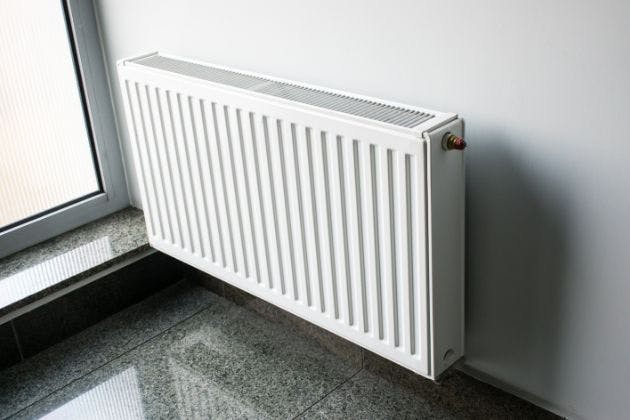
Step 1: Check if one radiator is cold or all of them
The first thing to work out is whether you have a problem with the whole heating system or just one radiator. This helps narrow down the likely cause very quickly.
Walk around your home and carefully feel each radiator. Check both the top and bottom, and, if safe, each side. Make a note of which ones are hot, warm or completely cold.
All radiators cold: Likely a boiler, controls or system-wide issue.
Some radiators cold: Often an air, balancing, valve, or sludge issue.
Only one radiator cold: Usually a local problem with that radiator or its valves.
Once you know which group you fall into, you can move on to the right checks.
Step 2: Are the boiler and heating controls actually on?
Before worrying about faults, confirm that the heating is actually calling for heat. Many “no heating” visits turn out to be control settings or switched-off boilers.
Thermostat and programmer settings
Check that your room thermostat is turned up above the current room temperature. If it is set too low, the boiler will not fire even if the programmer says the heating is on.
Look at your programmer or smart controls and ensure the heating mode is set to “On” or the correct timed schedule. If you have recently changed the clock or had a power cut, make sure the time and date are correct.
Is the boiler firing up?
Stand near the boiler and see if it lights or shows a “flame” symbol when the heating is turned on. Modern boilers often have a display that shows status and fault codes.
If the boiler does not fire at all or shows an error code, do not remove any covers or attempt gas work. Any work on gas components or inside the boiler casing must only be carried out by a Gas Safe registered engineer.
Step 3: Safe checks for all or most radiators cold
If the boiler appears to be on but most radiators stay cold, there are a few things you can safely look at.
Check that the radiator valves are open
Each radiator will normally have two valves, one on either side. One may have numbers or a head you can turn by hand, such as a thermostatic radiator valve (TRV). The other is often a lockshield, usually adjusted with a small spanner or screwdriver.
Make sure any hand‑operated valve is fully open by turning it anti‑clockwise. Avoid changing the lockshield settings too much at this stage, as these are used for balancing the system.
Look for signs of a stuck TRV
TRVs can sometimes stick shut, especially after the summer when the heating has been off. Typical signs include one radiator staying cold while others nearby get hot, even though the TRV is set to a high number.
You can gently tap the TRV head with your hand to see if it frees. If you feel confident, you may remove the plastic head (not the metal body) to see if the pin underneath moves up and down. Do not force it; if it stays stuck, it is best to call an engineer to avoid leaks or damage.
Check the boiler pressure (sealed systems only)
If you have a combi boiler or a sealed system, there will be a pressure gauge on the front of the boiler or nearby pipework. When the system is cold, it is usually around 1.0 to 1.5 bar, but check your manual for the correct range.
If the pressure is very low, the boiler may not run properly. Many homeowners safely top up pressure using the filling loop, but if you are unsure, see your manual or contact an engineer. Repeated pressure loss, or pressure that rises too high, is a sign you need a Gas Safe engineer to investigate.
Step 4: Radiators warm at the bottom but cold at the top
If the bottom of the radiator is hot but the top is cold, the most common cause is trapped air. This stops hot water filling the whole radiator.
Bleeding radiators safely
Bleeding releases the trapped air and often restores full heat. You will need a radiator key, a cloth, and ideally a small container to catch drips.
Turn the heating off and let the system cool for a while to reduce the risk of hot water escaping. Place the cloth under the bleed valve at the top corner of the radiator, insert the key, and turn slowly anti‑clockwise until you hear air hissing.
Once water starts to emerge in a steady stream, close the valve by turning it clockwise. Check the boiler pressure again afterwards, as bleeding can cause it to drop, and top up carefully if needed.
Step 5: Radiators hot at the top but cold or cool at the bottom
If your radiator is hot at the top but noticeably cooler at the bottom, this often points to sludge or limescale build‑up. Dirt and corrosion settle at the bottom, restricting water flow.
In areas like Birmingham and the surrounding region, harder water and older heating systems can increase the chance of sludge and limescale forming over time. This can affect efficiency and lead to cold spots on radiators.
Some homeowners try flushing a single radiator by turning valves off and draining it, but a full system powerflush is usually the most effective cure for widespread sludge. This should be carried out by a heating professional with the right equipment.
Step 6: One side hot, one side cold – balancing issues
If one end of a radiator is hot and the other stays cool, or some radiators in the house are roasting while others barely warm up, your system may need balancing. Balancing involves adjusting the lockshield valves so that hot water is shared more evenly.
While it is possible to balance a system yourself, it can be time‑consuming and involves multiple small adjustments. Many homeowners prefer to ask an engineer to set this up during a boiler service or radiator upgrade.
What you should not DIY
There are clear limits to what is safe for a homeowner to attempt. The following should always be left to a qualified Gas Safe engineer:
Any work inside the boiler casing or on gas components
Persistent boiler fault codes that keep returning
Repeated loss of system pressure, especially if you see leaks
Smell of gas or unusual burning smells from the boiler or flue
If you experience no heating and no hot water, frequent boiler lockouts, or visible water leaks around the boiler or pipework, stop trying to reset the system and arrange professional help as soon as possible.
FAQs about radiators not heating up
Why are my radiators cold when the boiler is on?
If your boiler is firing but radiators are still cold, common causes include incorrect thermostat or programmer settings, closed radiator valves, low system pressure, trapped air, or sludge. Work through the safe checks above, and if nothing changes, it is time to call a Gas Safe engineer.
Why is only one radiator cold?
A single cold radiator often points to a local issue such as a stuck TRV, a closed valve, trapped air, or a blockage in that radiator. Check the valves are fully open, then try bleeding it if the top is cold. If it remains cold while others are hot, an engineer may need to look for a stuck valve or internal blockage.
Can I use my heating if only the bottom of the radiators is cold?
You can usually still use the heating, but the system will be less efficient and rooms may not warm evenly. Cold bottoms usually mean sludge build‑up, which is best dealt with by a professional powerflush and, if needed, fitting filters or inhibitors to protect the system.
How often should I have my boiler and radiators serviced?
Most manufacturers recommend a boiler service once a year. During a service, a heating engineer can also check radiator performance, valves and system water quality. Regular servicing helps catch early signs of sludge, leaks or failing parts before they turn into bigger problems.
Next steps and when to call Bog Standard Plumbing and Heating
If you have tried the safe checks above and your radiators are still not heating properly, it is sensible to get professional help rather than struggle through another cold spell. Continued issues with no heat, recurring cold spots, or pressure problems are all warning signs.
For fast boiler repairs, expert system balancing, and thorough powerflushing, contact Bog Standard Plumbing and Heating on 03301132248. Whether you need urgent boiler repair, preventative boiler servicing, or help tackling sludge‑blocked radiators, their Gas Safe engineers can get your heating running efficiently and reliably again.